Active Leak? Call 513-758-6246 to schedule service
BBB Accredited | 5-Star Google Rating | Licensed & Insured
25+ Years
Experience
Ohio Licensed
Fully Insured
Google Trusted
5-Star Reviews
Our Promise
Upfront Pricing
Owner-Operated
Quality Work
Tankless Water Heater Installation in Cincinnati, OH
Endless Hot Water. Properly Sized. Installed Right..
Running out of hot water mid-shower, or watching the dishwasher and two showers fight over the same tank, is usually what finally sends homeowners looking for a better option. A tankless water heater heats water on demand instead of storing and reheating 40-50 gallons around the clock, which means a properly sized system can keep up with a busy household without ever running dry — and typically uses less energy doing it.
513 Plumbing & Gas Solutions installs gas and electric tankless water heaters for homeowners throughout Blue Ash, Symmes Township, Loveland, Madeira, Sharonville, and the rest of Greater Cincinnati. Whether you’re replacing a tank that’s on its last leg or building new, we’ll help you figure out if tankless is actually the right fit for your house before we ever talk equipment. Still weighing tankless against a traditional tank? →
What Is a Tankless Water Heater?
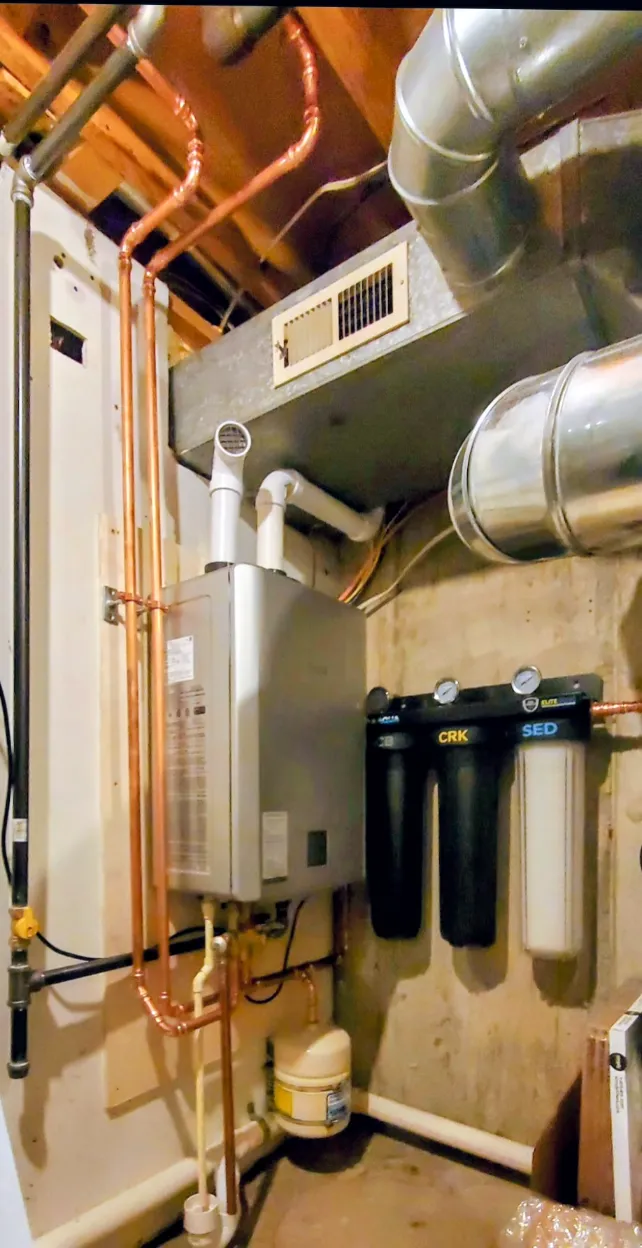
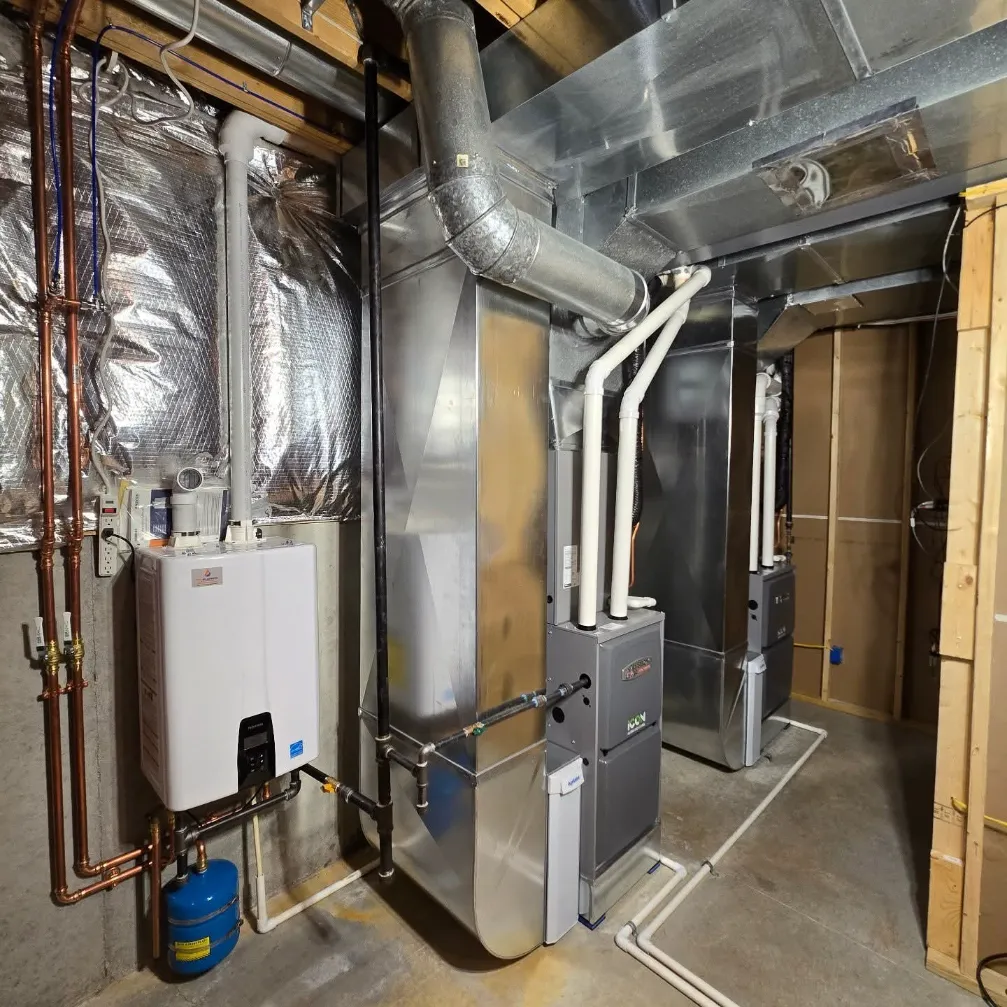
A traditional water heater keeps 40 to 50 gallons hot and ready in a tank, whether you’re using it or not. A tankless unit skips the tank entirely — it heats water as it flows through the system, only when a hot water fixture is actually turned on. There’s no tank to run out and no standing water sitting around losing heat between uses.
Sized correctly for your household, a tankless system gives you hot water for back-to-back showers, laundry, and dishes running at the same time, without the “wait for the tank to recover” delay a traditional unit forces on a busy morning.
Whether these benefits translate into real savings for your household depends on your actual hot water usage — we’ll talk through that honestly rather than assume tankless is automatically the right upgrade.
Your Trusted Local Tankless Water Heater Experts in Cincinnati
Why Homeowners Trust Us With Tankless Installations
Installing a tankless system right the first time takes more planning than most homeowners expect — gas sizing, venting, clearances, load calculations. Our team handles that evaluation before any equipment gets ordered, and every installation is tested under actual running conditions, not just powered on and left. Getting a tankless installation wrong is expensive to unwind; we’d rather take the extra hour upfront to get it right. We’re licensed & insured in Ohio, BBB Accredited with an A+ Rating, and a proud member of the Blue Ash Chamber of Commerce.
Is a Tankless Water Heater Right for Your Home?
Tankless isn’t automatically the best choice for every house, and we’d rather tell you that upfront than sell you a unit that’s a poor match for your plumbing. Before recommending a system, we look at household size and peak hot water demand, your home’s existing gas line capacity (many tankless units need a larger gas supply than a standard tank), electrical requirements for electric tankless models, venting requirements specific to the unit, available installation space, and your budget and how long you plan to stay in the home.
What to Expect During Installation
Swapping a tank for a tankless unit is rarely a like-for-like replacement — it’s closer to a small mechanical upgrade. Depending on your existing setup, installation may involve upsizing gas piping, adding or modifying venting, running new electrical circuits, or adjusting water connections.
Our installation process: evaluate your current gas, electrical, and plumbing setup; properly size the unit to your home’s peak demand, not just its square footage; remove and dispose of the old tank; complete all required gas, electrical, and water connections to code; and test the system under load before we consider the job done.
We’ll flag any required upgrades — like a gas line resize — before work begins, so the quote you approve is the price you pay.
Tankless Water Heater Maintenance
Tankless units last longer than tank water heaters, but only if the heat exchanger doesn’t fill up with mineral scale. Periodic flushing keeps the internals clear, and it matters more in Greater Cincinnati than in some markets — a lot of homes here run harder water than homeowners realize. If you’re seeing scale on faucets or showerheads elsewhere in the house, a water softener installed alongside your tankless unit will protect both the heater and the rest of your plumbing. See what that pairing looks like →
Why Homeowners Choose 513 Plumbing & Gas Solutions
We know you have options when searching for a plumber. Here are the reasons why customers choose us.
Frequently Asked Questions for Tankless Water Heater Installation
When sized correctly for your home’s peak demand, yes — you won’t run out the way you would with a tank, since the unit heats water as it flows rather than drawing down a fixed supply.
Most households see a real efficiency improvement because the unit only heats water when it’s actually being used, instead of maintaining a full tank of hot water around the clock.
In most cases, yes, though some homes need gas line, venting, or electrical upgrades to support the new unit. We’ll identify what’s needed and price it into your quote upfront — no surprises mid-installation.
With regular flushing to control mineral buildup, many tankless systems significantly outlast a traditional 8-to-12-year tank water heater.
Not always, but if your home has hard water, a softener meaningfully protects the heat exchanger from scale buildup — the leading cause of reduced performance in tankless systems. We’ll flag it if your water conditions call for one.
Cost depends on the unit and whatever gas, venting, or electrical work your home needs to support it. We charge a service call fee to evaluate your setup, then give you one firm, written quote covering the equipment and all required installation work — not a rough estimate that grows once the job starts.